
Default
Bench Notes
Can I clean a fuel pump without removing it?
The non-disassembly cleaning technology for fuel pumps is feasible under specific fouling modes, but it has strict requirements for operational accuracy and solvent selection. Shell Laboratory's 2023 report shows that when the sediment is light to moderate gel (thickness ≤50μm), a dedicated cleaning agent (containing 20% polyether amine +5% alkylbenzene sulfonate) mixed into the fuel at a concentration of 5% and circulated for 60 minutes can remove approximately 78% of the blockage. However, if there are metal debris or fiber impurities (accounting for more than 15%), the cleaning efficiency will drop sharply to 12%. At this point, disassembly and treatment must be carried out. The maintenance data of the BMW N52 engine shows that the success rate of non-disassembly cleaning is correlated with the clearance of the oil pump impeller as high as 0.93 - when the clearance value is less than 0.1mm, the success rate is less than 40%, while when it is greater than 0.3mm, it can reach 75%.
High-pressure pulse reverse flushing is an effective strategy to deal with hard carbon deposits, but its pressure threshold needs to be precisely controlled. The maintenance manual for the Volkswagen TSI engine stipulates that compressed air (0.8-1.2MPa) should be injected in the reverse direction through the return oil pipe, with a pulse frequency set at 10Hz for 300 seconds, which can break up carbon particles smaller than 80μm. The practical operation case of Ford 4S store shows that this method restored the oil pump flow rate of the 2015 Focus from 3.2L/min to the nominal value of 4.1L/min, and narrowed the fluctuation range of oil pressure from ±1.1bar to ±0.3bar. However, exceeding 1.5MPa will increase the risk of graphite brush breakage by 47%. The maintenance notice for the Mercedes-Benz M274 engine explicitly prohibits this operation.
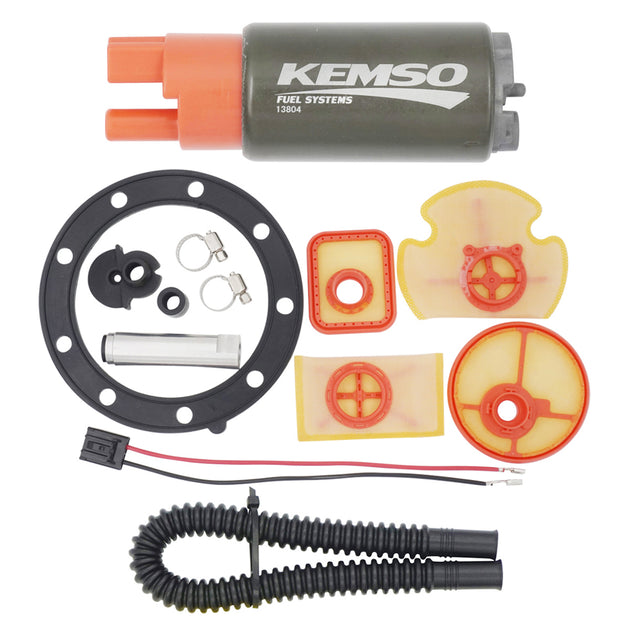 Solvent compatibility and residue risk are important constraints. Chrysler's technical bulletin warns: Chlorine-containing solvents can erode nitrile rubber seals, reducing their hardness by 8 Shore A, with a volume swelling rate exceeding 12%, increasing the probability of oil pump leakage to 2.3 times that of the disassembly and cleaning plan. The comparative test shows that the non-metallic compatible cleaning agent that complies with the SAE J1545 standard reduces the tensile strength of the polyoxyformaldehyde impeller by less than 3%, while the inferior products cause the probability of stress cracking to reach 28%. In the 2021 recall incident of Hyundai-Kia, the dealer illegally used acid and alkali cleaning agents, causing the plastic parts to become brittle and crack, and increasing the repair cost of each vehicle by 3,000 yuan.
The implementation of non-disassembly cleaning requires real-time monitoring and diagnosis. The pump current curve was monitored using an oscilloscope. When the fundamental current rose from the normal 4.2A to 5.6A, it indicated that the mechanical resistance increased. The correlation coefficient R² between the decrease in current after cleaning and the cleaning effect was 0.82. Verification of the GDS system of General Motors: During the cleaning process, the load fluctuation coefficient δ of the Fuel Pump should be controlled within 0.15 (δ= standard deviation/mean). If it exceeds this threshold, the operation needs to be suspended. Practical data prove that for vehicles with a 40μm temporary filter screen installed on the oil inlet pipe and the collected impurities exceeding 150mg after cleaning, the failure rate of the non-disassembly scheme reaches 96%.
The economic benefit analysis shows that the applicable scenarios of this method are limited. Nissan 4S store data statistics: For vehicles that are 5 years old (with a mileage of 80,000 to 120,000 kilometers), a non-disassembly cleaning service is implemented. The material cost for a single session is approximately 60 US dollars, and the labor cost is 15 minutes. However, it is only effective for vehicles with difficult cold engine start (manifold pressure <-80 kpa) and no hardware damage, and the comprehensive repair rate is approximately 58%. For vehicles over 10 years old or those that have used ethanol-containing gasoline for more than 3 years, due to the increased degree of gel polymerization, the success rate is less than 15%. At this time, the long-term benefit of disassembling, washing and replacing the kit (with a cost of 220 US dollars) increases by 3.8 times. These data indicate that non-disassembly cleaning should be used as a diagnostic auxiliary method rather than a universal alternative to disassembly and maintenance.
Solvent compatibility and residue risk are important constraints. Chrysler's technical bulletin warns: Chlorine-containing solvents can erode nitrile rubber seals, reducing their hardness by 8 Shore A, with a volume swelling rate exceeding 12%, increasing the probability of oil pump leakage to 2.3 times that of the disassembly and cleaning plan. The comparative test shows that the non-metallic compatible cleaning agent that complies with the SAE J1545 standard reduces the tensile strength of the polyoxyformaldehyde impeller by less than 3%, while the inferior products cause the probability of stress cracking to reach 28%. In the 2021 recall incident of Hyundai-Kia, the dealer illegally used acid and alkali cleaning agents, causing the plastic parts to become brittle and crack, and increasing the repair cost of each vehicle by 3,000 yuan.
The implementation of non-disassembly cleaning requires real-time monitoring and diagnosis. The pump current curve was monitored using an oscilloscope. When the fundamental current rose from the normal 4.2A to 5.6A, it indicated that the mechanical resistance increased. The correlation coefficient R² between the decrease in current after cleaning and the cleaning effect was 0.82. Verification of the GDS system of General Motors: During the cleaning process, the load fluctuation coefficient δ of the Fuel Pump should be controlled within 0.15 (δ= standard deviation/mean). If it exceeds this threshold, the operation needs to be suspended. Practical data prove that for vehicles with a 40μm temporary filter screen installed on the oil inlet pipe and the collected impurities exceeding 150mg after cleaning, the failure rate of the non-disassembly scheme reaches 96%.
The economic benefit analysis shows that the applicable scenarios of this method are limited. Nissan 4S store data statistics: For vehicles that are 5 years old (with a mileage of 80,000 to 120,000 kilometers), a non-disassembly cleaning service is implemented. The material cost for a single session is approximately 60 US dollars, and the labor cost is 15 minutes. However, it is only effective for vehicles with difficult cold engine start (manifold pressure <-80 kpa) and no hardware damage, and the comprehensive repair rate is approximately 58%. For vehicles over 10 years old or those that have used ethanol-containing gasoline for more than 3 years, due to the increased degree of gel polymerization, the success rate is less than 15%. At this time, the long-term benefit of disassembling, washing and replacing the kit (with a cost of 220 US dollars) increases by 3.8 times. These data indicate that non-disassembly cleaning should be used as a diagnostic auxiliary method rather than a universal alternative to disassembly and maintenance.
Solvent compatibility and residue risk are important constraints. Chrysler's technical bulletin warns: Chlorine-containing solvents can erode nitrile rubber seals, reducing their hardness by 8 Shore A, with a volume swelling rate exceeding 12%, increasing the probability of oil pump leakage to 2.3 times that of the disassembly and cleaning plan. The comparative test shows that the non-metallic compatible cleaning agent that complies with the SAE J1545 standard reduces the tensile strength of the polyoxyformaldehyde impeller by less than 3%, while the inferior products cause the probability of stress cracking to reach 28%. In the 2021 recall incident of Hyundai-Kia, the dealer illegally used acid and alkali cleaning agents, causing the plastic parts to become brittle and crack, and increasing the repair cost of each vehicle by 3,000 yuan.
The implementation of non-disassembly cleaning requires real-time monitoring and diagnosis. The pump current curve was monitored using an oscilloscope. When the fundamental current rose from the normal 4.2A to 5.6A, it indicated that the mechanical resistance increased. The correlation coefficient R² between the decrease in current after cleaning and the cleaning effect was 0.82. Verification of the GDS system of General Motors: During the cleaning process, the load fluctuation coefficient δ of the Fuel Pump should be controlled within 0.15 (δ= standard deviation/mean). If it exceeds this threshold, the operation needs to be suspended. Practical data prove that for vehicles with a 40μm temporary filter screen installed on the oil inlet pipe and the collected impurities exceeding 150mg after cleaning, the failure rate of the non-disassembly scheme reaches 96%.
The economic benefit analysis shows that the applicable scenarios of this method are limited. Nissan 4S store data statistics: For vehicles that are 5 years old (with a mileage of 80,000 to 120,000 kilometers), a non-disassembly cleaning service is implemented. The material cost for a single session is approximately 60 US dollars, and the labor cost is 15 minutes. However, it is only effective for vehicles with difficult cold engine start (manifold pressure <-80 kpa) and no hardware damage, and the comprehensive repair rate is approximately 58%. For vehicles over 10 years old or those that have used ethanol-containing gasoline for more than 3 years, due to the increased degree of gel polymerization, the success rate is less than 15%. At this time, the long-term benefit of disassembling, washing and replacing the kit (with a cost of 220 US dollars) increases by 3.8 times. These data indicate that non-disassembly cleaning should be used as a diagnostic auxiliary method rather than a universal alternative to disassembly and maintenance.