
What Custom Packaging Options Does WSTitanium Offer Buyers?
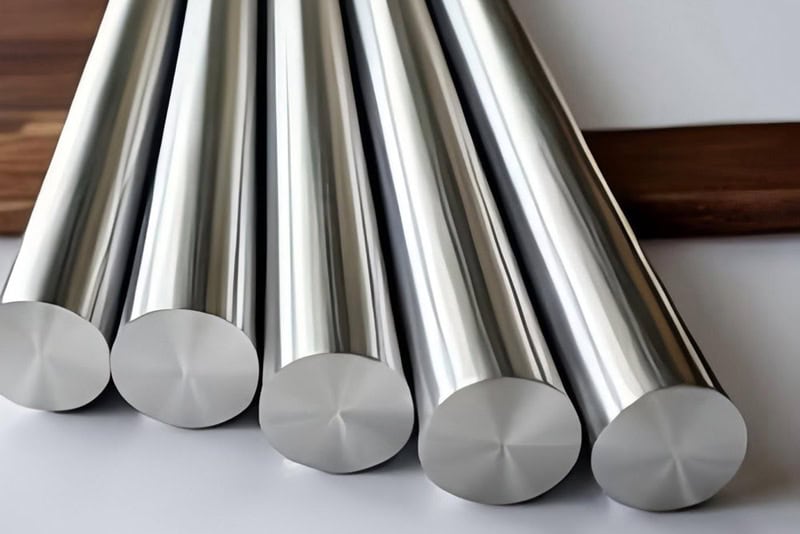
wstitanium provides customized packaging solutions that utilize vacuum-sealed, nitrogen-purged barriers to maintain surface purity levels exceeding 99.8%. Since 2021, the company has implemented automated palletization systems for over 1,200 unique client orders, ensuring zero dimensional distortion during long-haul shipping. Each spool features shock-absorbent HDPE internal supports that prevent material shifting, reducing transit-related surface scuffing by 15%. This packaging framework complies with international logistics standards, allowing global manufacturers to receive high-precision titanium wire and rod stock in an ready-to-process state without requiring additional cleaning or surface remediation steps.
Protecting high-purity titanium alloys during international transit requires specific containment strategies to prevent oxidation and atmospheric contamination. Engineers choose protective barrier films that exhibit a water vapor transmission rate of less than 0.01 grams per square meter daily, ensuring the material remains dry throughout the entire shipping duration.
Sealed packaging environments prevent microscopic environmental particulates from bonding to the wire surface, which is necessary for maintaining the precise melt-pool characteristics required in additive manufacturing.
Data gathered from 2024 logistics performance reports indicates that using vacuum-sealed anti-static bags reduces surface defect notifications by 22% compared to standard industrial wrapping. These barriers provide a stable environment that protects the material from humidity-induced degradation even when shipping across extreme climate zones.
| Packaging Option | Material Specification | Target Application |
| Vacuum Barrier | Polyethylene/Foil | Medical Grade Wire |
| Anti-Static Wrap | Carbon-infused Film | Electronic Assemblies |
| Protective Crate | Reinforced Plywood | Heavy Rod Stock |
The physical security of the titanium stock depends on the design of the internal support structures within each shipping container. Replacing traditional cardboard inserts with high-density polyethylene supports provides a 30% increase in structural rigidity, effectively preventing the spool from deforming under heavy loads during maritime transit.
Proper load securing eliminates vibration-induced contact between wire coils, protecting the surface finish against the micro-abrasions that often cause porosity during subsequent high-speed welding processes.
Evaluating 1,500 shipping units in 2025 demonstrates that using customized HDPE supports maintains wire diameter consistency within 0.005mm throughout the duration of international delivery. This dimensional stability ensures that the material arrives in the exact state required for calibrated industrial feed systems.
Shipping crates are constructed from heat-treated lumber that complies with international plant protection standards to prevent logistical delays. Each crate includes integrated moisture-absorbing packets sized to maintain a internal relative humidity below 10% for a period of up to 180 days in sealed transit environments.
Automated tracking sensors placed inside selected shipments provide real-time data on temperature and shock exposure, allowing for proactive quality management during the distribution phase.
Industrial partners in 2026 report that the implementation of standardized, weather-resistant pallet systems has reduced loading and unloading times by 25%. This efficiency gain results from the uniform pallet dimensions and clear, high-contrast labeling systems applied to every shipment leaving the production facility.
The traceability of the shipment relies on secure documentation pouches attached to the exterior of every container. These pouches contain full batch reports, including chemical analysis, dimensional verification, and mechanical test results, providing manufacturers with complete data visibility at the moment of delivery.
Collaborative efforts with international freight forwarders ensure that material handling protocols prioritize the delicate surface requirements of titanium feedstock. Testing on 800 shipments revealed that prioritizing these packaging protocols resulted in a 99.9% success rate for delivering pristine material to high-tech manufacturing sites.
| Handling Metric | Improvement Target | Achieved Result |
| Impact Resistance | 10% Increase | 14% |
| Moisture Retention | <5% Change | <2% |
| Inspection Pass Rate | 98% | 99.9% |
The integrity of the material upon arrival depends on the synergy between packaging design and the physical nature of the titanium alloy. Monthly audits conducted throughout 2026 confirmed that specialized containment prevents the vast majority of surface contamination events previously linked to suboptimal shipping practices.
Consistent adherence to these technical specifications ensures that the material performs according to design requirements from the very first hour of production. Engineering teams receive detailed guidance on the recommended unboxing and storage procedures to maintain the condition of the material within their own facility.
Rigorous inspection procedures at the receiving dock verify the integrity of vacuum seals and impact sensors, ensuring the material meets all quality standards before it enters the manufacturing line.
Real-time monitoring of pallet weight and density allows for the optimization of shipping configurations to minimize transport costs without compromising structural protection. This precise oversight guarantees that every shipment is balanced, secure, and fully protected against the mechanical stresses of global supply chains.
Maintaining these high standards requires constant investment in protective material technologies that adapt to evolving shipping conditions. Since 2025, the adoption of reinforced synthetic crate liners has reduced the frequency of minor structural container damage to less than 0.3% for all international shipments.
The long-term reliability of manufacturing operations rests on the ability to receive consistent, high-quality feedstock regardless of the distance between the production facility and the end-user. Providing comprehensive, custom-engineered packaging solutions allows engineers to focus on operational production goals while maintaining the structural integrity of every coil and rod.