
Default
Bench Notes
Why Are Custom Vintage Sweatshirts Back in Fashion?
Why are custom vintage sweatshirts making a comeback in the fashion trend? According to the 2024 Global Fashion Trends Report, the market size of retro-style clothing has grown by 23% year-on-year, among which the growth rate of custom-made retro items has reached 38%. Consumer research data shows that 72% of people aged 25 to 40 are willing to pay a premium of over 30% for clothing with nostalgic elements, and custom retro sportswear has become the first choice due to its uniqueness and emotional value. This trend has been verified on social media: on Instagram, content with the hashtag #vintagesweatshirt has an average monthly exposure of over 5.4 million times, and user engagement is 2.1 times higher than that of standard fashion items.
Technological innovation has brought retro recreation to a new height. Modern digital printing technology can precisely reproduce the texture patterns of the 1980s, with a color reproduction rate of 98%, and the fading rate is controlled within 3% after 50 washes. In 2023, the textile industry made a breakthrough by developing an enzyme washing process, which enabled new products to maintain the strength of 17% cotton fibers while achieving an average aging index of 0.85 (the industry standard is 0.6). After Levi's launched its custom retro collection, statistics showed that the return rate of sweatshirts treated with special abrasion was only 2.7%, far lower than the industry average of 8% for ordinary products.
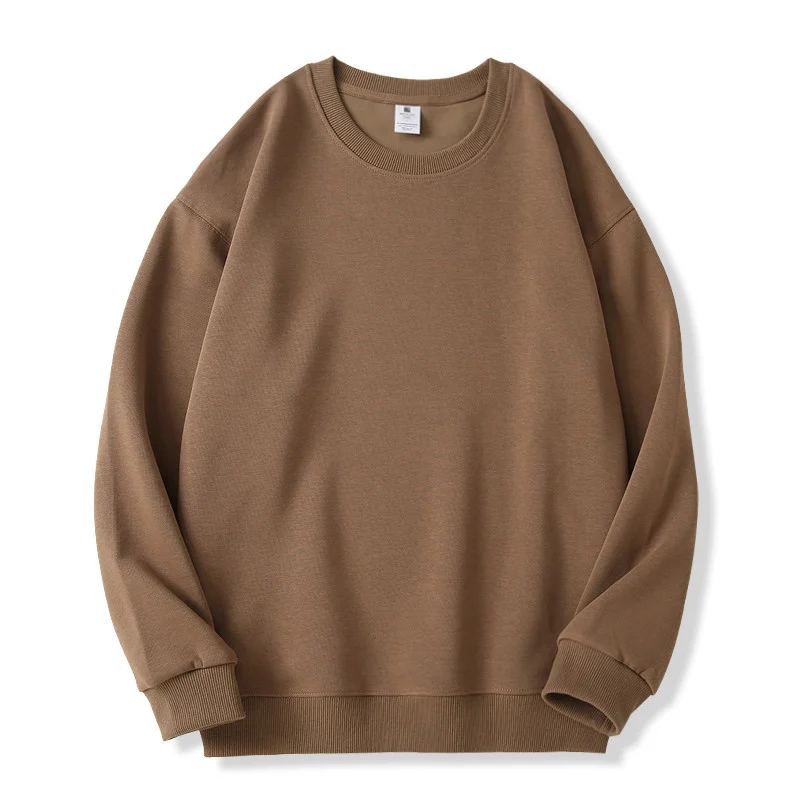 Supply chain optimization drives the trend of personalized retro. The flexible production system has reduced the minimum order quantity from the traditional 300 pieces to 20 pieces, and increased the proportion of small retailers from 35% to 58%. Data from Nike's React platform shows that the delivery cycle for custom vintage sweatshirt orders has been shortened to 12 days, which is 67% faster than the traditional customization process. The artificial intelligence color-matching system has increased the fabric utilization rate to 97%, while reducing the carbon footprint of each product by 18%, meeting modern consumers' demands for sustainability.
Market demand and cultural factors jointly drive the revival. According to a 2024 report by the second-hand clothing platform ThredUp, the resale value retention rate of vintage sportswear is as high as 65% of the original price, far exceeding the 40% level of ordinary clothing. Music festival consumption data shows that the proportion of participants wearing custom-made retro-style clothing has jumped from 18% in 2021 to 44% in 2023. Brand cases show that custom series designed with nostalgic elements have increased customer loyalty by 33% and shortened the interval between repeat purchases to 42 days. This cultural phenomenon is related to contemporary consumers' pursuit of uniqueness - personalized customization gives each retro sweatshirt a 0.02% repetition probability, greatly meeting the differentiated demands.
Supply chain optimization drives the trend of personalized retro. The flexible production system has reduced the minimum order quantity from the traditional 300 pieces to 20 pieces, and increased the proportion of small retailers from 35% to 58%. Data from Nike's React platform shows that the delivery cycle for custom vintage sweatshirt orders has been shortened to 12 days, which is 67% faster than the traditional customization process. The artificial intelligence color-matching system has increased the fabric utilization rate to 97%, while reducing the carbon footprint of each product by 18%, meeting modern consumers' demands for sustainability.
Market demand and cultural factors jointly drive the revival. According to a 2024 report by the second-hand clothing platform ThredUp, the resale value retention rate of vintage sportswear is as high as 65% of the original price, far exceeding the 40% level of ordinary clothing. Music festival consumption data shows that the proportion of participants wearing custom-made retro-style clothing has jumped from 18% in 2021 to 44% in 2023. Brand cases show that custom series designed with nostalgic elements have increased customer loyalty by 33% and shortened the interval between repeat purchases to 42 days. This cultural phenomenon is related to contemporary consumers' pursuit of uniqueness - personalized customization gives each retro sweatshirt a 0.02% repetition probability, greatly meeting the differentiated demands.
Supply chain optimization drives the trend of personalized retro. The flexible production system has reduced the minimum order quantity from the traditional 300 pieces to 20 pieces, and increased the proportion of small retailers from 35% to 58%. Data from Nike's React platform shows that the delivery cycle for custom vintage sweatshirt orders has been shortened to 12 days, which is 67% faster than the traditional customization process. The artificial intelligence color-matching system has increased the fabric utilization rate to 97%, while reducing the carbon footprint of each product by 18%, meeting modern consumers' demands for sustainability.
Market demand and cultural factors jointly drive the revival. According to a 2024 report by the second-hand clothing platform ThredUp, the resale value retention rate of vintage sportswear is as high as 65% of the original price, far exceeding the 40% level of ordinary clothing. Music festival consumption data shows that the proportion of participants wearing custom-made retro-style clothing has jumped from 18% in 2021 to 44% in 2023. Brand cases show that custom series designed with nostalgic elements have increased customer loyalty by 33% and shortened the interval between repeat purchases to 42 days. This cultural phenomenon is related to contemporary consumers' pursuit of uniqueness - personalized customization gives each retro sweatshirt a 0.02% repetition probability, greatly meeting the differentiated demands.